Key Takeaways
- Suitable areas must be load-bearing, accessible and technically serviceable.
- Parking areas, yard areas or free operational spaces may be suitable depending on site conditions.
- Power, water, wastewater, data connections and technical utilities should be reviewed early.
- Approval requirements depend on location, intended use and installation duration.
Which Site Areas May Be Suitable
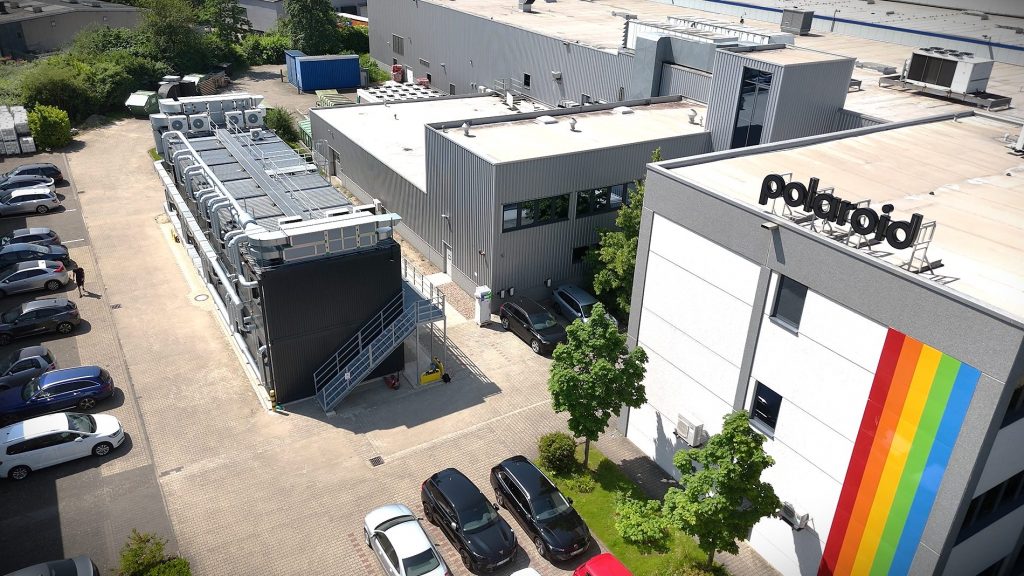
Modular laboratory containers can be installed on different operational areas depending on the project. Suitable options may include paved parking areas, yard areas, storage areas, free operational spaces or other technically serviceable site areas.
The decisive factor is not only whether enough space is available. The area must also be suitable for weight, access, utility connections, drainage, safety distances and possible approval requirements.
Whether an area can actually be used must therefore be assessed through a site-specific review. A visually free area is not automatically a suitable installation area for a modular laboratory.
Why Ground Load Capacity and Access Matter
Depending on size, equipment and technical infrastructure, a laboratory container can have significant weight. Ground load capacity, surface condition and potential foundation preparation must therefore be reviewed before installation is planned.
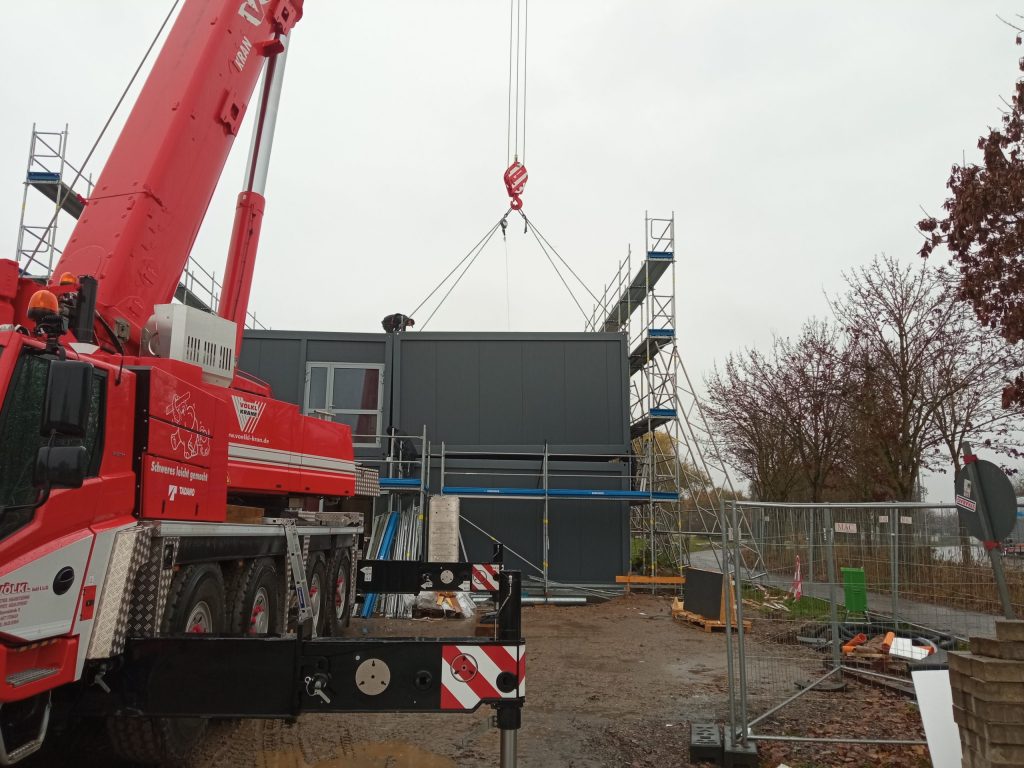
Access is also critical. Delivery, unloading and installation require suitable access routes, turning areas and, depending on the project, crane positioning space. Narrow gates, low clearance, limited turning radii or restricted operational sites can influence feasibility and planning.
The earlier these points are reviewed, the easier it is to determine whether installation is directly feasible or whether preparatory site measures are required.
A site area is not suitable only because it is large enough. Ground load capacity, access, utility connections, safety distances and approval feasibility determine whether a laboratory container can realistically be installed.
Which Utility Connections Are Required
Modular laboratory containers require different technical connections depending on their intended use. Common requirements include power, water, wastewater, data network, ventilation, compressed air or additional technical media such as gases.
A basic laboratory has different requirements than a chemical analytical laboratory, a microbiology area, a diagnostic laboratory or a GMP-oriented laboratory. Ventilation, exhaust air routing, media supply and wastewater should therefore be included in the site review at an early stage.
If existing connections are available nearby, integration may be easier. If utilities need to be newly routed over longer distances, this can affect planning, cost and timeline.
Rental
LabPool
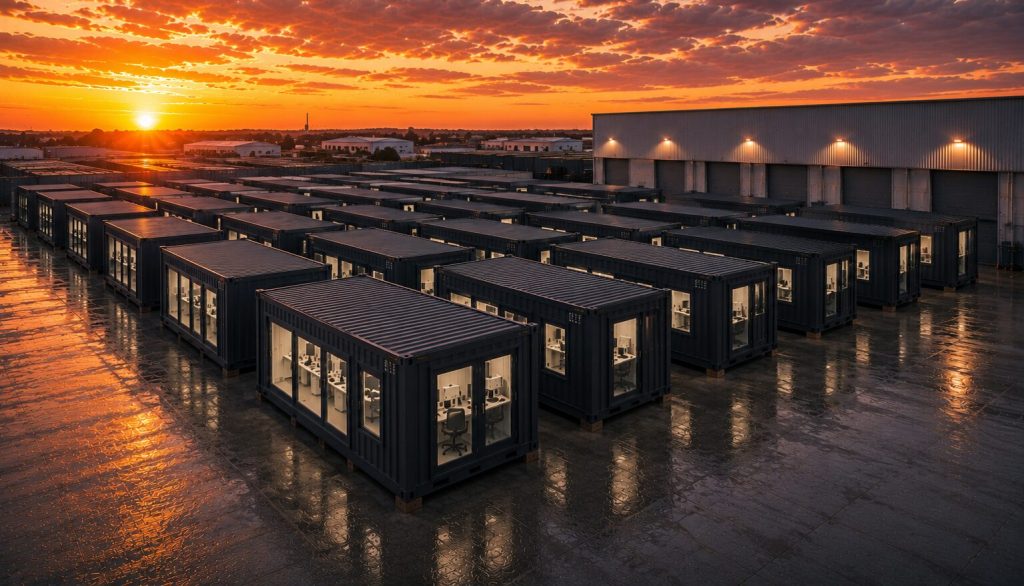
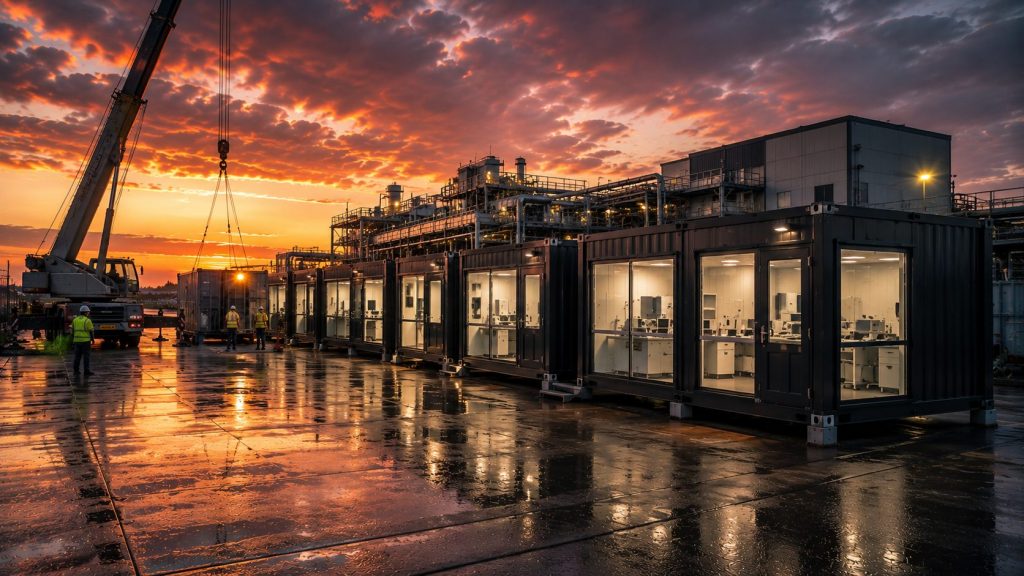
Preconfigured laboratory units for projects where our stock matches the requirement.
Purchase

Financing

Structured financing models to support investment in laboratory infrastructure.
Site Conditions Compared
| Criterion | Favorable Condition | To Be Reviewed |
|---|---|---|
| Area | Paved parking area, yard area or free operational space with sufficient room | Size, use, safety distances and possible expansion areas |
| Ground | Load-bearing, level and paved ground conditions | Ground load capacity, foundation requirements and load distribution |
| Access | Good accessibility for transport, unloading and crane positioning | Gate widths, turning radii, clearance heights and maneuvering areas |
| Utilities | Power, water, wastewater, network or technical utilities available nearby | Capacity, distance, routing and connection effort |
| Safety | Sufficient distance to buildings, traffic routes and sensitive areas | Fire protection, escape routes, access control and safety zones |
| Approval | Early clarification of approval situation and planned installation duration | Location, intended use, duration, operator duties and authority requirements |
Approvals, Fire Protection and Safety Distances
In addition to technical suitability, regulatory and safety-related requirements must be reviewed. Depending on location, intended use and installation duration, a modular laboratory container may require approval.
Fire protection, escape routes, safety distances, access control and proximity to existing buildings or traffic routes must also be considered. These points are especially important when the laboratory container operates with technical ventilation, fume hoods, hazardous substances, gases or other media-carrying systems.
An early review helps avoid situations where a seemingly suitable area later fails because of approval requirements, safety distances or technical connection conditions.
When LAB Modulbau Can Support
LAB Modulbau supports companies, research institutions and operators of technical laboratory environments in reviewing suitable areas for modular laboratory containers. The question is not only about the installation footprint, but about the combination of site, use, technical systems, access and approval feasibility.
During a project review, area, ground load capacity, access, utility connections, safety distances, drainage, fire protection and usage requirements are evaluated. This provides the basis for assessing whether installation is realistic and which preparatory measures may be required.
An early site review is especially useful when several possible areas are being considered or when the laboratory container needs to be integrated into ongoing operations.
Frequently Asked Questions
Geeignet sein können befestigte Parkflächen, Hofflächen, Lagerflächen, freie Betriebsflächen oder andere technisch erschließbare Areale. Entscheidend sind nicht nur Größe und Verfügbarkeit, sondern auch Tragfähigkeit, Zufahrt, Medienanschlüsse, Sicherheitsabstände und Genehmigungsfähigkeit.
A parking area may be suitable if ground conditions, load capacity, access, safety distances and utility connections are appropriate. Regulatory requirements and the planned installation duration must also be reviewed. A reliable assessment requires a site-specific review.
Depending on the intended use, power, water, wastewater, data network, ventilation, compressed air, gases or additional technical utilities may be required. The exact utility planning depends on laboratory type, equipment, safety requirements and planned operation.
Temporary or permanent laboratory containers may require approval depending on location, intended use, installation duration, size and site conditions. The final assessment lies with the responsible authorities. Early regulatory clarification is recommended.
A site assessment reviews available space, ground load capacity, access, crane positioning, utility connections, drainage, fire protection, safety distances, approval requirements and the intended use of the laboratory container.