Key Takeaways
- Interim laboratories help maintain lab capacity during renovation, refurbishment or relocation.
- Modular laboratory containers can be installed on company sites if site conditions allow it.
- Rental, LabPool or project-specific configuration should be assessed based on need and duration.
- Technical feasibility must be reviewed for utilities, wastewater, safety class and ventilation.
Why an Interim Laboratory Makes Sense During Renovation
Laboratory buildings age. Ventilation systems need to be renewed, media connections must be upgraded and room concepts often have to be adapted to new regulatory or operational requirements. When central laboratory areas are unavailable for weeks or months, immediate operational risks arise.
Affected areas can include analytical laboratories, cleanrooms, microbiology laboratories, diagnostic areas or quality control laboratories. In these situations, ongoing tests, studies, releases or sample workflows cannot simply be paused.
An interim laboratory creates temporary laboratory capacity during renovation. Critical processes can be relocated while existing laboratory areas are refurbished or modernized. The prerequisite is that technical and regulatory feasibility at the site is reviewed early.
Risks of Laboratory Renovation Without Replacement Space
Planning a laboratory renovation without replacement space can create operational interruptions, project delays and additional follow-up costs. This becomes especially critical when laboratory processes are part of quality assurance, diagnostics, research, production support or regulatory release workflows.
Without an interim laboratory, ongoing tests may not continue, staff capacity may not be used efficiently and contractual or regulatory obligations may be affected. Planned renovation timelines can also shift when construction work takes longer than expected.
A modular interim laboratory reduces these risks by providing a controlled temporary working environment. This helps keep laboratory operations more predictable while the existing infrastructure is renovated or modernized.
An interim laboratory should be reviewed early if central laboratory areas will be unavailable during renovation, refurbishment or modernization while ongoing laboratory processes must continue.
How Modular Interim Laboratories Maintain Operations
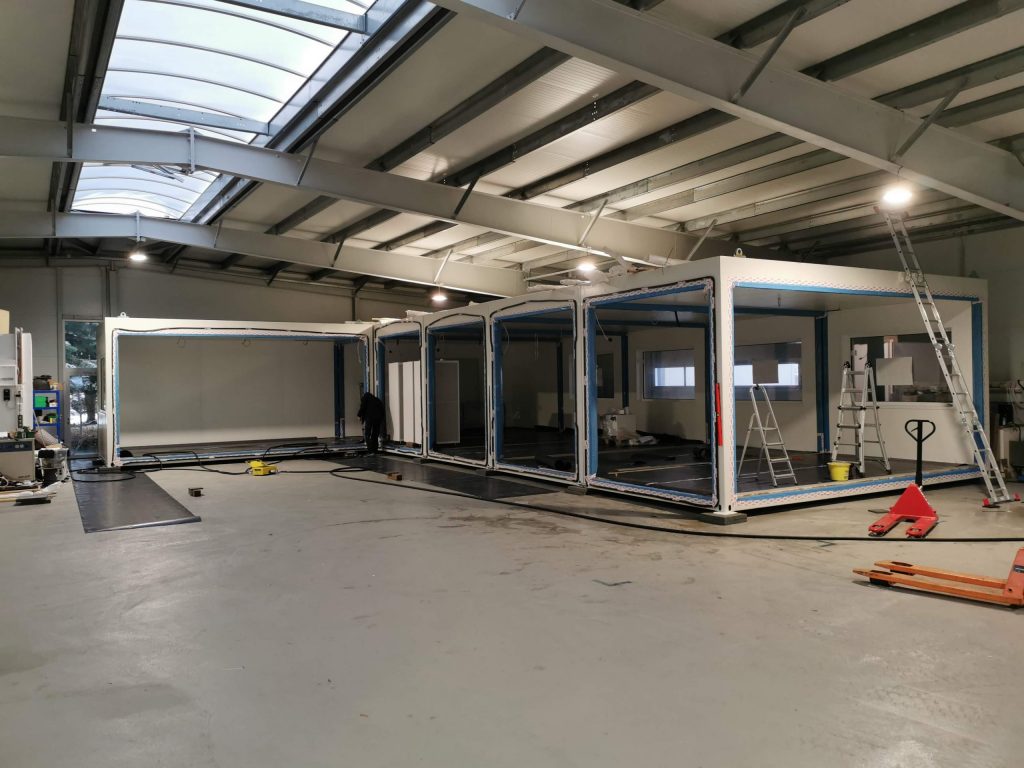
Modular laboratory containers are not simple office containers. They are technically equipped room modules for laboratory-specific applications. Depending on the project, they can be configured with ventilation systems, media supply, electrical installation, water, wastewater, laboratory workstations, safety equipment and suitable surface materials.
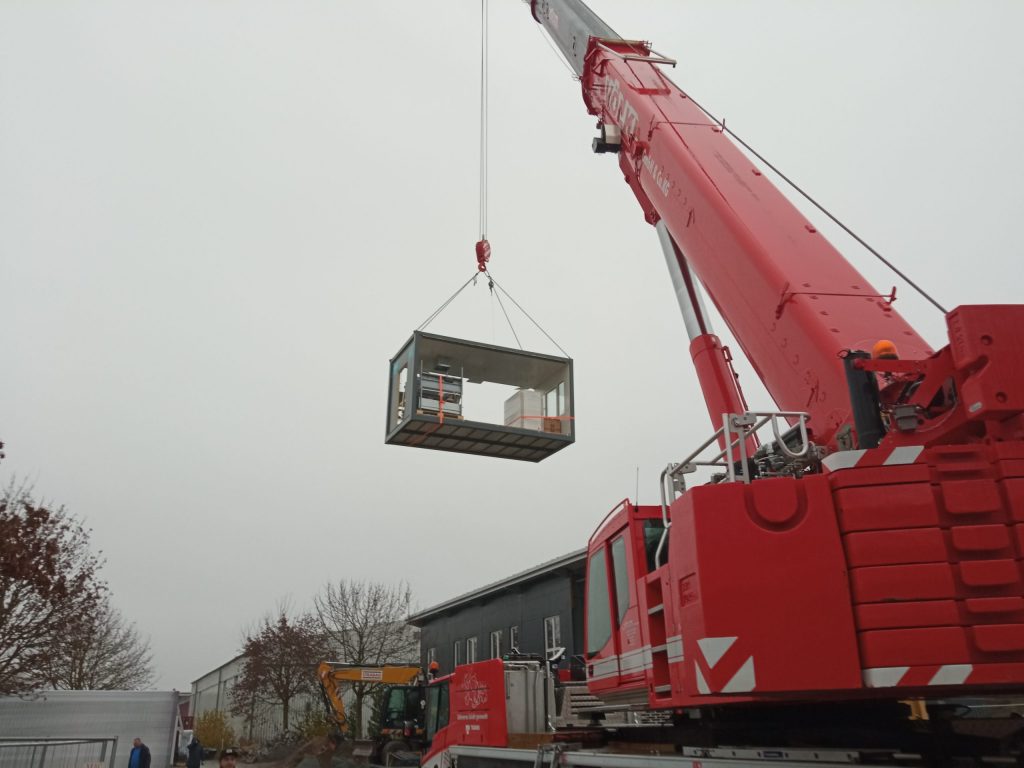
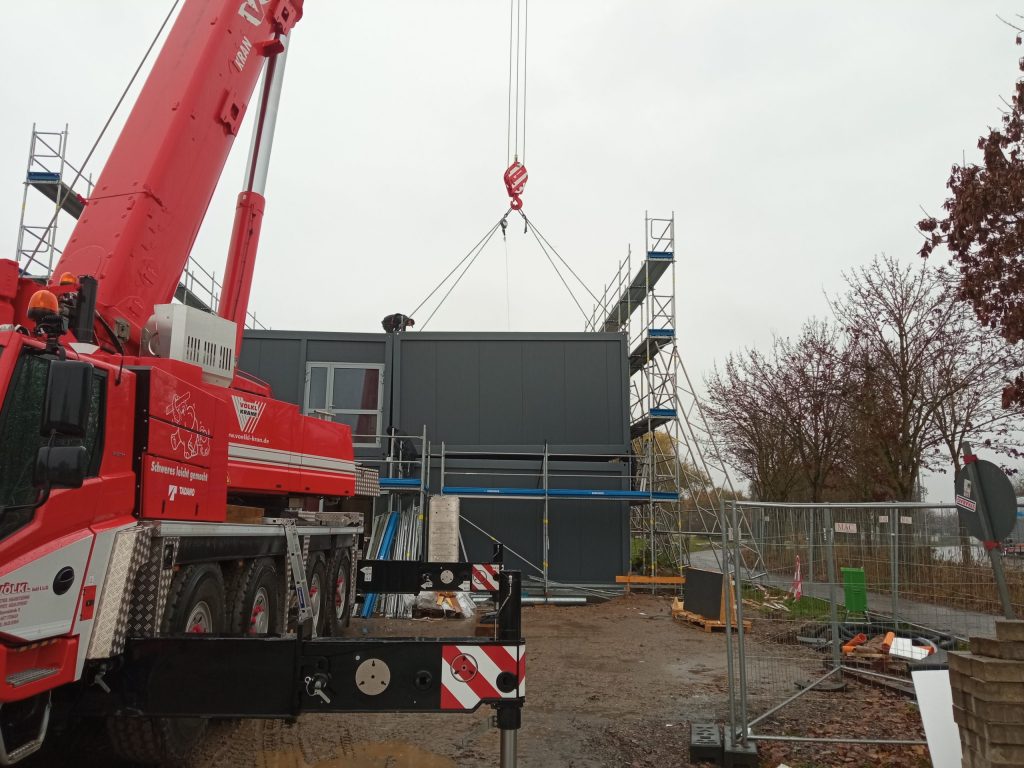
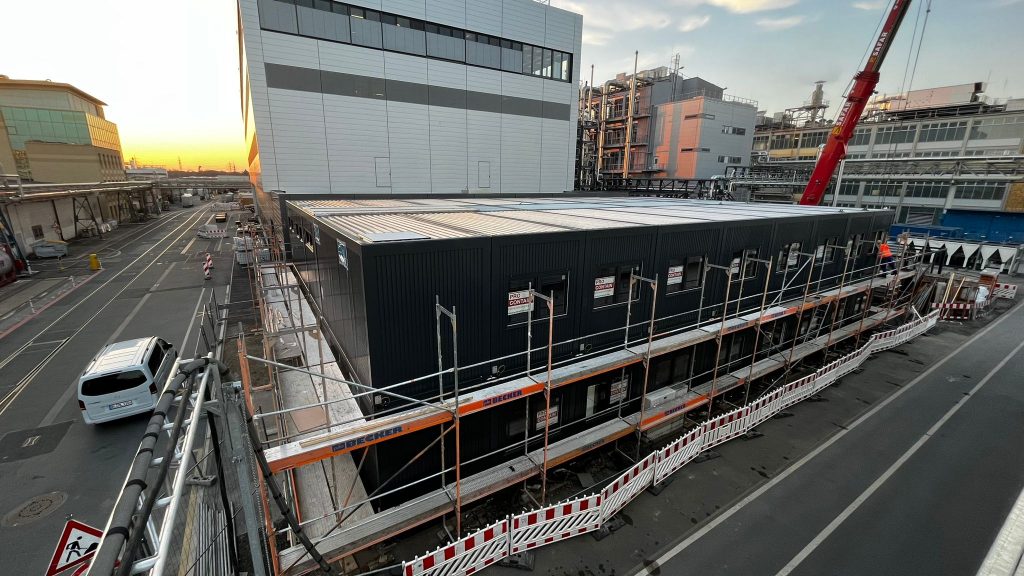
Installation can take place on parking areas, paved yard areas, storage areas or other available operational surfaces if site conditions allow it. Key factors include ground load capacity, access routes, media connections, safety distances and possible approval requirements.
An interim laboratory can be placed close to the existing site, helping keep staff routes, sample transport and internal workflows short. However, the specific feasibility must always be reviewed project by project.
Interim Laboratory
Compared with
Renovation Without Replacement Space
| Criterion | With Interim Laboratory | Without Replacement Space |
|---|---|---|
| Lab Operations | Critical laboratory processes can continue during renovation | Laboratory areas may be unavailable during refurbishment or renovation |
| Regulatory Requirements | GxP, ISO or accredited processes can be planned project-specifically | Higher risk of interruptions in releases, audits or ongoing obligations |
| Staff Utilization | Laboratory teams can continue working closer to the existing site | Staff may need to pause work, relocate or move to decentralized locations |
| Project Timeline | Renovation and laboratory operation can be planned in parallel more effectively | Every renovation delay directly affects ongoing laboratory operations |
| Cost Risk | Temporary replacement capacity can be calculated as part of the project | Downtime, project delay and lost assignments can create follow-up costs |
| Flexibility | Use, extension or dismantling can be adapted depending on the project | No direct fallback option if renovation or construction phases take longer |
Technical Requirements and Site Conditions
Before an interim laboratory can be planned in detail, technical requirements and site conditions must be reviewed. These factors determine which type of interim laboratory is feasible and what lead time should be considered for planning, approval, equipment and installation.
Important technical points include laboratory type, safety class, ventilation concept, media supply, wastewater, electrical supply, data network, equipment requirements and surface or monitoring requirements. A microbiology laboratory has different requirements than an analytical laboratory, a diagnostic laboratory or a quality control area.
The site must also be suitable. Relevant factors include available space, ground load capacity, access for delivery or crane positioning, connection options, drainage, fire protection distances and possible approval requirements. Whether a laboratory container can be installed at the site must therefore always be evaluated project-specifically.
Rental, LabPool or Project-Specific Configuration
Different delivery models may be relevant for temporary laboratory capacity during renovation. The right option depends on project duration, technical requirements, available budget and the required level of flexibility.
Rental is especially suitable when a laboratory is needed only for a defined period, for example during renovation, modernization or relocation. It provides temporary laboratory capacity without requiring a permanent infrastructure investment.
LabPool may be relevant if an available unit with suitable equipment already exists. In this case, it can be reviewed whether an existing laboratory unit fits the specific requirement. If special safety classes, ventilation concepts or equipment integrations are required, a project-specific configuration may be necessary.
Rental
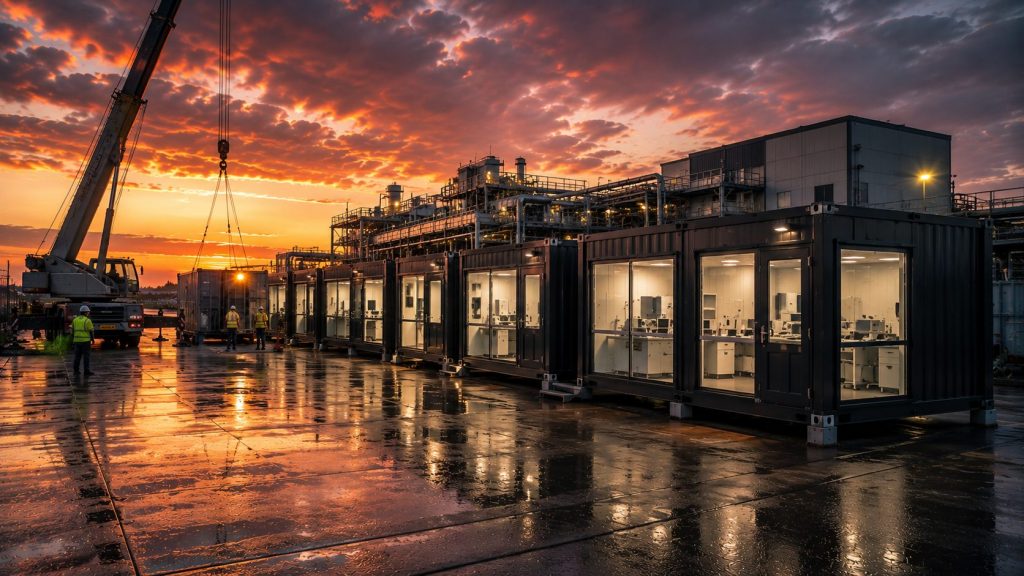
LabPool
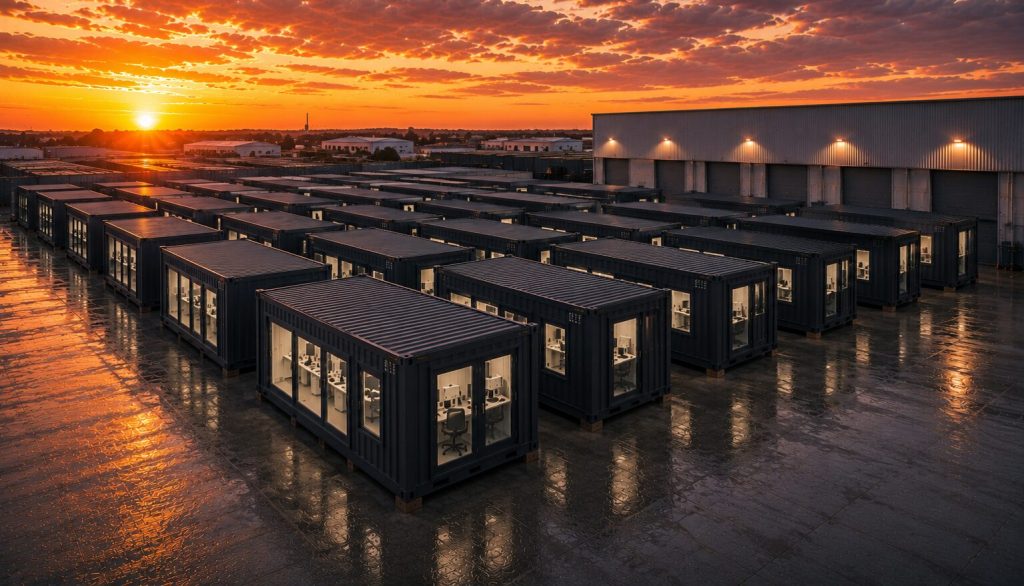
Preconfigured laboratory units for projects where our stock matches the requirement.
Project Configuration
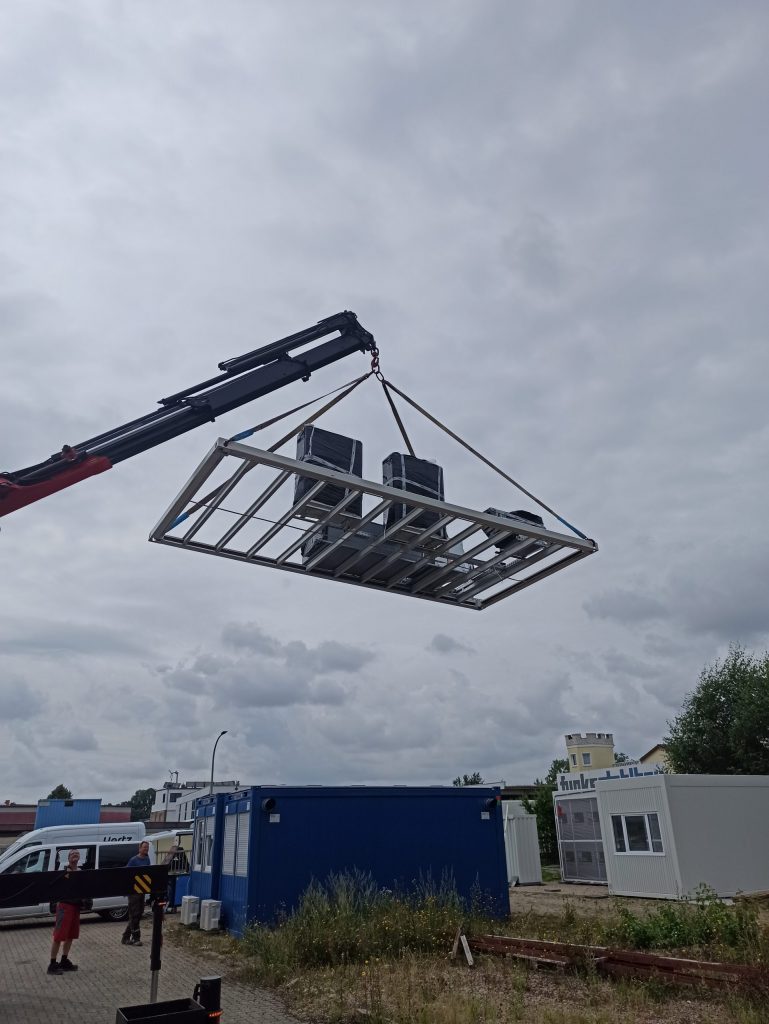
For specific requirements around safety class, ventilation, utilities or equipment integration.
When LAB Modulbau Can Support
LAB Modulbau supports companies, research institutions and operators of regulated laboratory environments in reviewing modular interim laboratory solutions. The key question is not only whether a laboratory container is available, but whether site conditions, intended use, technical requirements and project duration fit together.
During a project review, laboratory type, utilities, ventilation, safety requirements, installation area, approval situation and intended period of use are evaluated. This provides the basis for deciding whether rental, LabPool or a project-specific interim solution is suitable.
An early inquiry is especially useful when a renovation is already being planned, when laboratory areas will be temporarily unavailable or when ongoing processes must remain operational during refurbishment or modernization. The earlier feasibility is reviewed, the more planning flexibility remains.
Frequently Asked Questions
The required timeline depends on requirements, equipment, site conditions and approval status. Suitable LabPool units may have a shorter lead time than a project-specific new configuration. Utility connections, access conditions and regulatory review can significantly influence the schedule.
The required space depends on the size, use and configuration of the laboratory unit. In addition to the installation area, space may be needed for access, safety distances, utility routing and delivery or crane positioning. The exact space requirement must be reviewed project-specifically.
Temporary laboratory containers may require approval depending on the country, region, installation duration, intended use and site conditions. The final assessment lies with the responsible authorities. Early regulatory clarification is therefore recommended.
Modular laboratories can be designed for GMP-relevant requirements depending on the project. Important factors include ventilation concept, surfaces, monitoring, utilities, documentation and the operator’s specific processes. Feasibility must be assessed individually.
Rental costs depend on size, equipment, configuration effort, usage duration and site conditions. A reliable fixed price cannot be given without concrete project requirements. LAB Modulbau provides a project-specific proposal after reviewing the actual need.